Typeface Creator Drew Inspiration From a Surrealist
Dennis Nishi, Wall Street Journal Online, July 21, 2009
Richard Kegler has Marcel Duchamp to thank for a career in typeface design. In graduate school, Mr. Kegler did an art installation based on Mr. Duchamp’s work and used some of the late artist’s handwriting; it inspired him to design a typeface. Today, Mr. Kegler owns a small Buffalo, N.Y., company called P22 that designs and distributes typefaces online. The fonts have been used for books, magazines and album covers, as well as the walls of Starbucks coffee shops.
How You Can Get Here, Too.
* Best advice: Have a wide scope of interests. “Things that are seemingly so disparate seem to have a weird way of coming together,” says Mr. Kegler. “I used to run a record shop and some of the leftover packaging we had made ended up being used for our fonts.”
* Skills you need: Good drawing skills and a sense of history so you know where all these other type designs came from. Programming skills for designing OpenType fonts.
* Where you should start: A good design school and/or a good liberal arts or humanities program.
* Professional organizations to contact: The Type Directors Club. The Society of Typographic Aficionados.
* Salary range: According to the American Institute of Graphic Arts, the median income for entry-level designers was $35,000 in 2007. Senior designers earned an average of $62,000. Designers who were principals in firms earned $113,000.
Q: What inspired your first font?
A: The Duchamp font began as a part of my thesis installation on Marcel Duchamp’s “Large Glass.” He’s a French artist known for his wicked sense of humor. I wanted his text to be part of the installation and planned to project it on the wall. He’s known for using found objects in his art, so I created a readymade [a found object] of his handwriting.
Q: You started your firm in 1994. When did you start seeing your fonts being used?
A: From early on, we started seeing them popping up on books, billboards, ads and CD covers. One also ran on the titles for a short-lived NBC sitcom called “The Single Guy.” We were just having fun with it while building a name for ourselves in the typography world. It didn’t sink in until a few years later. We started going to design conferences and people were saying, “Man, you guys are everywhere.”
Q: How did you transition to selling online only?
A: By 2000, our fonts were being sold by the Book of the Month Club and the Discovery Channel catalog, and we had to warehouse all these boxes. That’s when we decided to try an experiment by offering them online. Nobody seemed to miss the packaging.
Q: How has P22 grown?
A: We’re five employees now, and we have a partnership of designers and freelancers. We also took over collections from other foundries.
Q: What are you working on these days?
A: We recently put out our first simultaneous metal and digital font release. The response for metal type has been surprising.
Q: Is it due to the revival of old-style letterpress printing? More people are buying and restoring small printers.
A: Exactly. It’s part of the do-it-yourself craft movement. We originally thought we’d sell half a dozen. We’ve sold over 50 sets, and they’re not cheap. People are dusting off these old [letterpress] printers and doing wedding invitations, art printing and rough concert posters. It’s mostly one-person shops, typically women.
Q: How has type designing changed since Gutenberg?
A: Being a designer is relatively the same, though it used to be that this was a skill handed down and protected like trade secrets. With the advent of desktop publishing, everybody can dabble by popping open software like Fontlab and drawing Bezier curves.
Q: Is it a tough market with so many fonts being offered?
A: People always ask if there need to be more fonts in the world. But that’s like saying there are already enough wines in the world. Just like fonts, each has its own character and depth.
***
Write to Dennis Nishi at cjeditor@dowjones.com
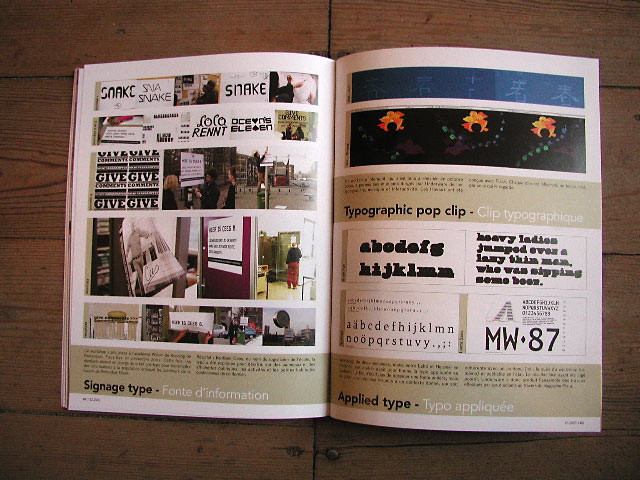 Type; you love it so much you want to marry it. We all know how it goes. Typeworkshop.com gives you a hundred more reasons to love typography. Produced by Scandinavian type designers, the site features both typeface profiles and a type basics section for those starting out. If you ever were puzzled by the sixty foot puppy metaphor, typeworkshop.com will help you to make sense of it all. Link is HERE.